Your Team Does Not Need More Accountability - It May Need More Clarity
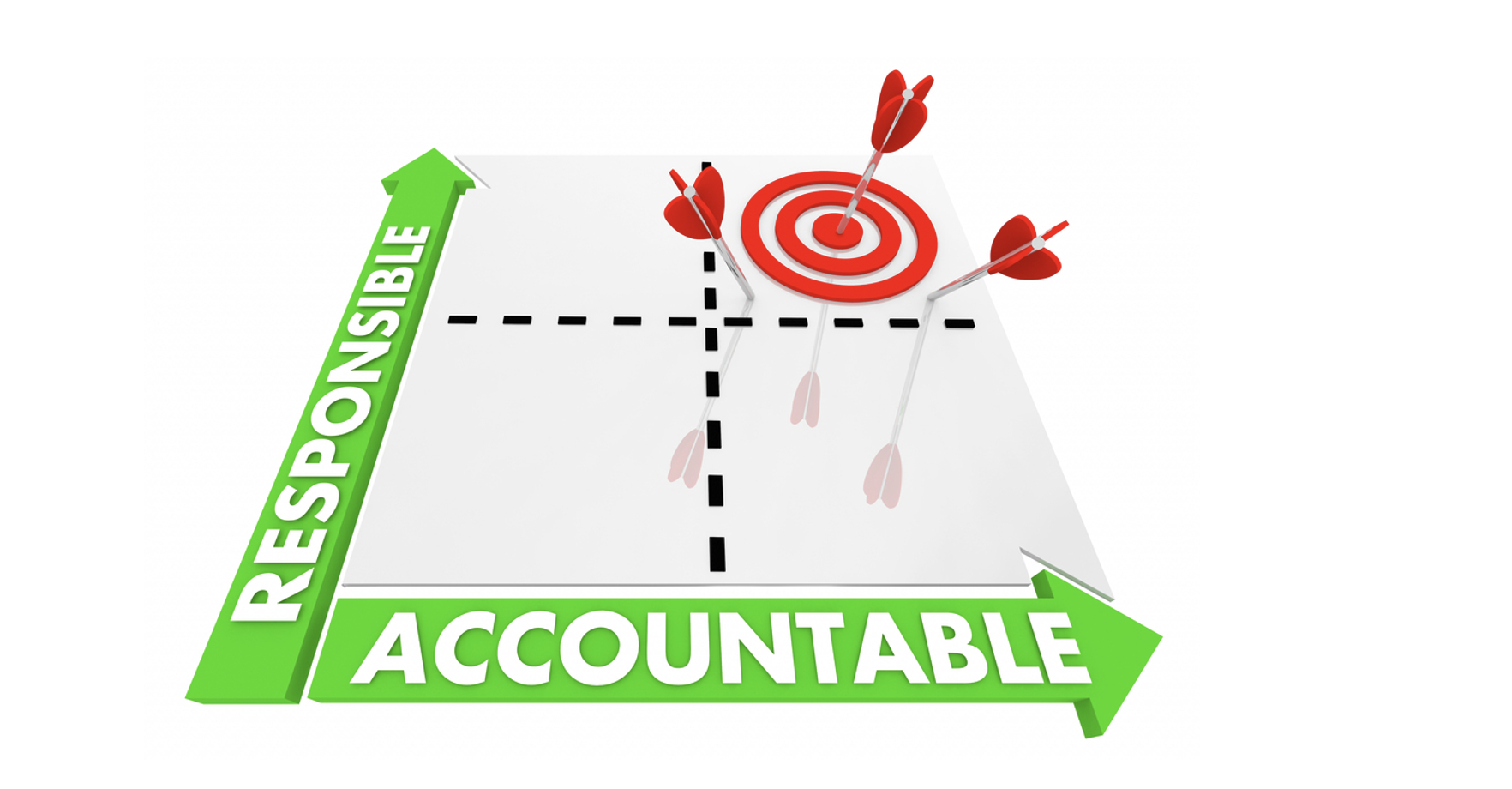
When something is not getting done in an organization, one word tends to appear very quickly: accountability. “We need more accountability.” “Managers need to hold people accountable.” “People need to take greater ownership.” Sometimes that diagnosis is exactly right. Accountability matters. Organizations cannot function well when expectations are repeatedly ignored, commitments are not honored, or performance problems remain unaddressed.
Yet there is another possibility leaders should consider before concluding that people simply need to be held more accountable. What if people cannot consistently own what has never been made sufficiently clear?
This distinction matters because organizations sometimes attempt to solve clarity problems with accountability interventions. The result is often frustration on both sides. Leaders believe they have communicated expectations. Staff believe expectations keep changing. Managers find themselves enforcing priorities they did not fully understand themselves. Everyone becomes increasingly frustrated, and eventually the problem gets described as a lack of accountability.
Yet accountability cannot compensate for ambiguity.
Consider how often employees are asked to navigate competing priorities. One leader says something is urgent. Another leader emphasizes something else. A new initiative is introduced without explicitly identifying what it replaces. Responsibilities overlap. Decisions are made in meetings but never clearly documented. Staff are told to “take ownership,” yet the boundaries of their authority remain uncertain.
Then, when something falls through the cracks, the organization asks, “Who is accountable?” There is a deeper question that should come first: Was the system clear enough for accountability to be fair?
Clarity means more than telling someone what to do. It means creating shared understanding about the outcome being sought, who owns what, what authority accompanies that responsibility, what success looks like, when something is due, how competing priorities should be handled, and when escalation is appropriate.
Without that shared understanding, people are forced to fill in the gaps. And whenever people fill in gaps, they do so differently. One employee interprets the request one way. A manager interprets it another way. Senior leadership assumes something else entirely. Everyone may be working hard and acting in good faith while moving in slightly different directions.
What looks like a performance problem may actually be an alignment problem. What looks like resistance may be uncertainty. What looks like poor ownership may be unclear authority. What looks like lack of accountability may be lack of clarity.
This does not mean accountability disappears. Quite the opposite. Clarity makes real accountability possible.
Research on goal-setting has long demonstrated that specific, challenging goals tend to produce stronger performance than vague intentions when people understand what is expected and have the conditions necessary to pursue it (Locke & Latham, 2002). Role ambiguity has likewise been associated with strain and poorer work outcomes. Human beings function better when they understand what they are responsible for and how their contribution fits into the larger whole.
Yet there is also a psychological dimension to clarity that leaders sometimes underestimate. Ambiguity consumes energy. When expectations are unclear, the mind continues working even when no visible work is occurring. People wonder whether they are doing the right thing. They reread emails. They interpret tone. They seek reassurance. They delay decisions. They create additional meetings. They copy more people into conversations because they are uncertain who actually needs to be involved.
Ambiguity creates cognitive and emotional overhead. Clarity gives that energy back. This is why clarity is not merely an operational tool. It is also a form of organizational regulation.
At SWEET Institute, we can understand this through the Four Layers of Transformation. At the Conscious Layer, we examine whether expectations, responsibilities, timelines, decision rights, and outcomes are explicit. At the Preconscious Layer, we ask how uncertainty is being experienced. Are people confident about what they own, or are they anxious about making the wrong decision? At the Unconscious Layer, we examine what the system has learned about responsibility. Do people genuinely have permission to decide, or have they learned that independent decisions may later be second-guessed? At the Existential Layer, we reconnect accountability to meaning. People need to understand not only what they are responsible for, but why their responsibility matters to the larger mission.
This is where accountability becomes something very different from punishment. Healthy accountability is not about catching people doing something wrong. It is about creating the conditions in which people can reliably own something important.
That requires expectations, authority, feedback, transparency, and consequences when commitments are repeatedly not met. However, the sequence matters: Clarity before accountability.
Before asking, “Who failed to do this?” ask, “How clear did we make ownership?” Before saying, “They should have known,” ask, “How would they have known?” Before escalating a performance issue, ask, “Were expectations observable, specific, and mutually understood?” Before demanding greater ownership, ask, “Have we given people the authority required to own the outcome?”
These questions do not weaken accountability. They make accountability credible. They also create something essential for sustainable performance: trust.
People are much more willing to accept accountability when they believe the system is fair, expectations are understandable, decisions are transparent, and the standards being applied to them are consistent.
This is why Decide with Clarity and Transparency is such an important part of the four-step rhythm we use in the Beyond Burnout 12-Month Leadership Cohort. We begin by Stabilizing, because clarity is difficult to create in a chronically reactive system. We Reframe, because the apparent performance problem may not be the actual problem. We Decide with Clarity and Transparency, because people need to know what has been decided, why, who owns what, and what happens next. Then we Align Work with Purpose, because accountability becomes more powerful when people understand how their commitments serve something meaningful.
Over time, something changes. Managers spend less time chasing, employees spend less time guessing, and meetings become more decisive. Escalations also decrease, ownership becomes clearer, friction decreases, and accountability becomes less about pressure and more about reliability.
Perhaps the most important question for leaders this week is this: Before asking whether your people are accountable enough, ask whether your organization is clear enough.
You may discover that some of the performance problems you have been trying to correct are actually clarity problems waiting to be solved.
The SWEET Call to Action
If your managers are repeatedly chasing follow-through, if employees seem uncertain about ownership, if the same issues keep returning despite conversations about accountability, or if leaders are frustrated that people are “not taking enough initiative,” another accountability training may not be the answer.
Your organization may need a clearer operating system.
The Beyond Burnout 12-Month Leadership Cohort helps leaders examine the structures beneath performance: clarity, decision-making, ownership, accountability, regulation, alignment, and purpose. The goal is not to lower expectations. It is to build systems in which high expectations can actually be met, and sustained.
Because accountability without clarity creates anxiety. Clarity with accountability creates ownership. And ownership changes organizations.