Why the Future of Leadership Is Not Time Management—It Is Energy Management
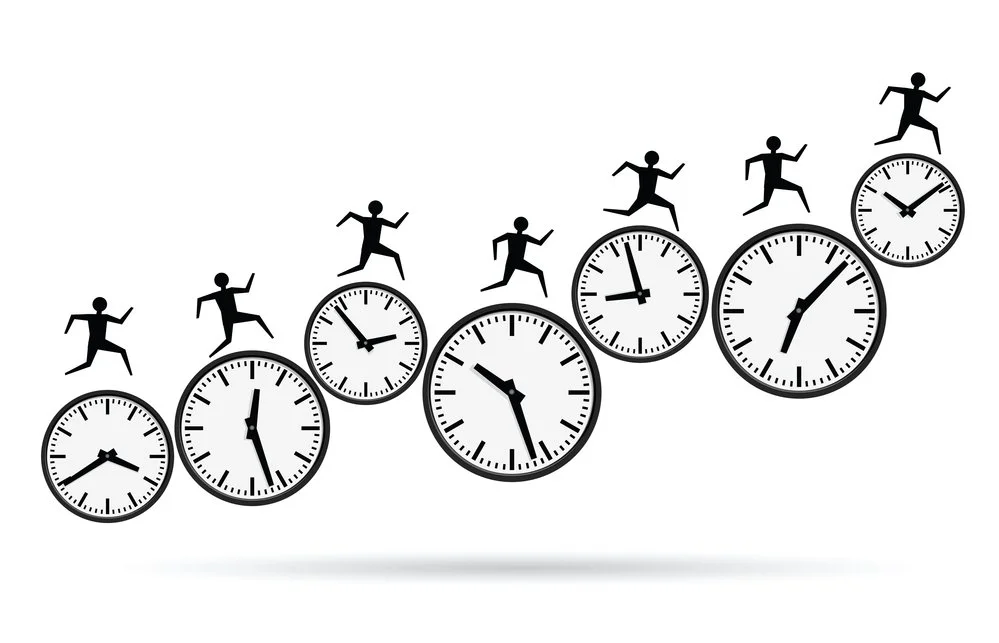
For generations, leadership has been taught as an exercise in managing time. Leaders fill their calendars, organize priorities, create schedules, monitor deadlines, and learn countless techniques for becoming more efficient. Entire industries have been built around helping people squeeze more productivity into every hour of the day.
These approaches have value, for time, deadlines, and organizations matter. Yet after working with leaders across healthcare, behavioral health, nonprofit organizations, and community agencies, we have repeatedly observed something that traditional leadership models often overlook.
Most leaders are not running out of time. They are running out of energy. That distinction is more important than it first appears.
Two leaders can begin the day with the same twenty-four hours. One finishes the day feeling focused, thoughtful, and capable of making difficult decisions. The other reaches the evening mentally exhausted, emotionally depleted, and unable to think clearly despite accomplishing roughly the same amount of work. The difference is rarely explained by time alone but by how energy is gained, protected, depleted, and restored throughout the day.
Many organizations continue struggling even after implementing better scheduling systems. Calendars become more organized, but people remain exhausted. Meetings become shorter, yet leaders still experience decision fatigue. Productivity tools improve, but creativity declines because the underlying issue has not been addressed.
Energy is not simply an individual characteristic. It is also an organizational outcome. Every system either replenishes or drains the people working within it.
When communication is unclear, energy is spent interpreting ambiguity. When priorities constantly shift, energy is spent reorienting attention. When conflict remains unresolved, emotional energy is consumed by vigilance rather than collaboration. When people feel disconnected from purpose, motivation gradually gives way to obligation.
Research in occupational health has consistently demonstrated that recovery, emotional regulation, and meaningful work contribute significantly to sustained performance and resilience. Human beings are biological, psychological, relational, and meaning-making beings whose capacity changes throughout the day.
At SWEET Institute, we encourage leaders to think about organizational energy through the Four Layers of Transformation:
The Conscious Layer
The Preconscious Layer
The Unconscious Layer
The Existential Layer
Together, these layers help leaders understand not only what people are doing, but how they are experiencing the work and whether the system renews or depletes them.
The deepest question leaders can ask is this: Does this organization help people become more alive, instead of merely more productive? Organizations that nurture curiosity, purpose, belonging, and contribution often discover that sustainable energy naturally follows.
When leaders begin thinking about energy rather than only time, they stop asking, 'How do we get more work out of people?' and begin asking, 'What conditions allow people to bring their best energy to their work?'
Managers become stewards of capacity rather than supervisors of activity. Inside the Beyond Burnout 12-Month Leadership Cohort, leaders learn that sustainable organizations are not built by extracting more from people but by designing systems that help people consistently bring their best thinking, healthiest relationships, and deepest sense of purpose to their work.
Our four-step rhythm begins with Stabilize, continues with Reframe, then Decide with Clarity and Transparency, and culminates in Align Work with Purpose. Together, these four steps create organizations that protect human energy while strengthening long-term performance.
Perhaps the most important question a leader can ask this week is not, 'How can my team get more done?' but, 'What is giving my team energy, and what is quietly taking it away?' The answer may reveal opportunities for transformation that no productivity dashboard will ever uncover.
The Call to Action
If your organization has become increasingly efficient but people still feel exhausted, if productivity initiatives have improved processes but not well-being, and if leaders feel they are constantly managing depletion instead of cultivating capacity, perhaps the next step is not another time-management strategy. Perhaps it is learning how to design an organization that protects and renews energy. That is one of the central aims of the Beyond Burnout 12-Month Leadership Cohort. Because sustainable organizations are not built by managing time alone. They are built by stewarding human energy with wisdom, intention, and purpose.