
Why Sustainable Performance Requires a Different Kind of Leadership Pace
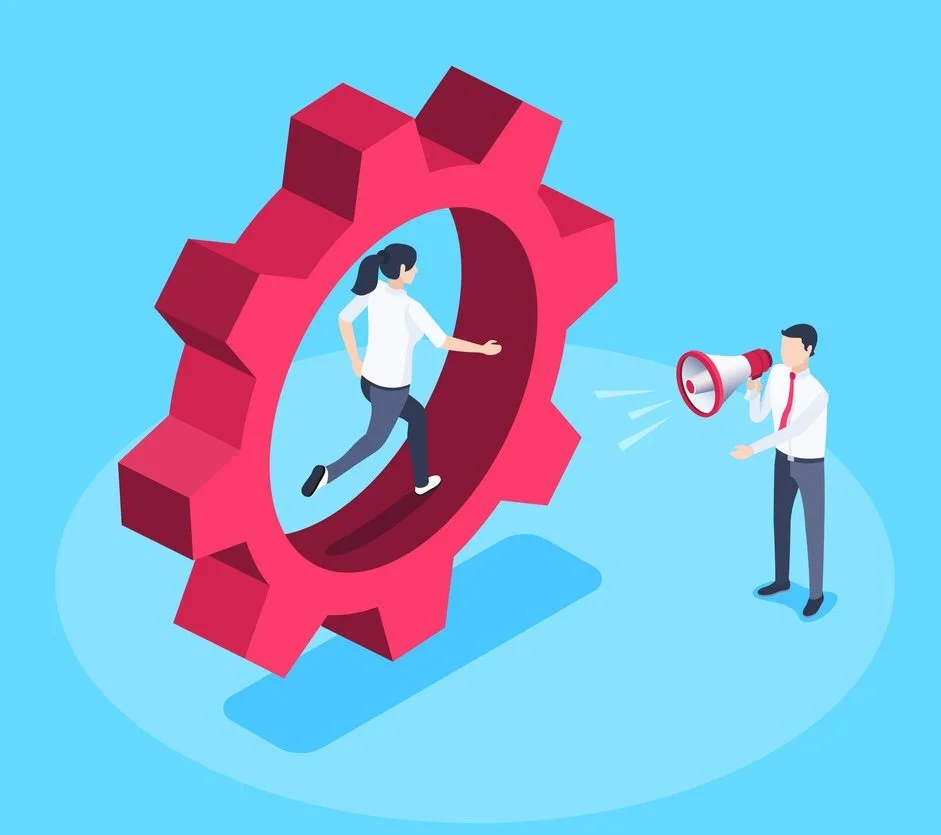
Most agencies are not lacking effort. People are working hard. Leaders are deeply committed. Teams are showing up every day. Yet… performance often feels inconsistent. Energy rises and crashes. Momentum builds, then disappears, and progress feels harder than it should.
So leaders push. They use more urgency, more follow-up, and more expectation. However, the truth that few systems are designed to acknowledge is that sustainable performance is not created by intensity. It is created by pace.
In other words, in many organizations, performance follows the familiar rhythm of “pushing, reacting, trying to recover, and then repeat.” These are also known as short bursts of productivity, followed by fatigue, followed by recovery, followed by another push, and it all creates the illusion of productivity.
Yet, over time, it leads to inconsistent output, declining energy, reduced creativity, increasing errors, and growing disengagement. This is because systems built on intensity cannot sustain themselves.
What the Science Tells Us About Performance
Human performance is not linear, rather, it is rhythmic. Research on cognitive performance and recovery shows that sustained high output requires cycles of effort and restoration, not constant pressure (McEwen, 2017; Kahneman, 2011). When individuals and teams operate without recovery, decision-making declines, attention fragments, emotional reactivity increases, and mistakes become more likely. The system becomes less effective the harder it pushes.
The Leadership Pace Problem
Leaders set the pace of the system, and they do so both through intention and behavior. When leaders respond immediately to everything, when they prioritize urgency over clarity, when they move quickly from issue to issue, and when they rarely pause to reflect, the organization mirrors that pace, and over time, pace becomes culture.
The Four Layers of Leadership Pace
Conscious Layer – What Leaders Do
They respond quickly, move tasks forward, and manage multiple prioritiesPreconscious Layer – What Teams Feel
“We need to move fast.” “We can’t slow down.” “Everything is urgent.”Unconscious Layer – What the System Reinforces
Speed equals competence. Availability equals commitment. And urgency equals importance.Existential Layer – What Work Becomes
Reactive, rushed, and fragmented, instead of thoughtful, stable, and sustainable.
The Shift: From Intensity to Rhythm
High-performing organizations do not eliminate urgency. They contain it, and they build predictable leadership rhythms, structured decision-making cycles, and protected time for thinking. They also build clear communication patterns and intentional pauses, and this, in turn, creates capacity.
SWEET Insight:
If your organization can only perform under pressure, it is not performing. It is compensating, for true performance is consistent, stable, and repeatable.
Why This Matters Now
If your organization feels constantly busy, frequently urgent, inconsistently productive, and dependent on pushing harder, then this is not a motivation issue. It is a pacing issue.
Where This Work Happens
This is exactly the kind of shift we work on inside the Beyond Burnout 12-Month Leadership Cohort. What we plan to master together is how to implement leadership rhythm, sustainable pacing, and structured decision cycles. We also master together workload stabilization and alignment between effort and capacity.
The SWEET Call to Action
If your organization works hard but struggles to sustain momentum, if performance depends on pushing rather than structuring, and if leaders feel they must constantly drive energy, then this is the moment to rethink pace.
Reach out.
Let’s talk about whether the Beyond Burnout Leadership Cohort is the optimal next step for building sustainable performance in your organization.